In 2018, Canada legalized the recreational use of cannabis. For some Canadians, legalization has made it easier to openly explore cannabis use. For others, navigating cannabis use is still extremely challenging.
Around the time of legalization, government organizations and researchers wondered about trends of cannabis use among pregnant and breast/chestfeeding individuals. One study analyzed Ontario’s Better Outcomes Registry and Network (BORN), a detailed birth registry that accounts for nearly 40% of all births in Canada. After looking at 5 years of registry data on live births and stillbirths, the authors found that cannabis use during pregnancy was 1.2% in 2012, and increased to 1.8% in 2017. Cannabis use during pregnancy was highest among women 15-24 years; in 2012, 4.9% of women in this age group used cannabis during pregnancy. In 2017, that percentage rose to 6.5%.
Most health organizations and healthcare providers advise pregnant/lactating individuals to abstain from cannabis use, with the main concern being the potential impact of cannabis on the infant’s brain. However, we don’t currently have conclusive evidence about the impacts of cannabis use during the perinatal period. Pregnant individuals who consume cannabis are more likely to also be affected by social determinants known to impact health including racism, poverty, mental health challenges, and trauma. Marginalized individuals are also likely to face increased stigma, surveillance, and punishment for cannabis use.
Ultimately, this means that there is a population of individuals who will use cannabis during pregnancy and/or lactation, but likely find it immensely difficult to find guidance and support from their healthcare team. Reproductive health is a highly sensitive issue. It raises controversial questions about infant and parental health, how to provide parents with the information and support they need, and the role of healthcare providers. Difficult questions require more research, conversation, honesty and empathy.
Dr. Saara Greene (Professor and Director of School of Social Work at McMaster University) and her research team embarked on a mission to understand the experiences and needs of parents who use cannabis while pregnant or lactating. Members of this community were involved at all levels of research as co-investigators, collaborators, as community research associates (CRAs) and as project participants.
Saara and her research team approached me with a goal: to translate their ongoing work into a visual community resource.
Wading Through the Weeds:
Cannabis, Pregnancy, and Lactation
-
Pregnant and lactating parents who consume cannabis, and the providers that work with and for them.
-
Storyboarding, illustration, animating, and compositing.
-
Dr. Saara Greene
Gab Griffith
Rochelle Maurice
Marisa Blake
Parent Advisory Board
Scientific Advisory Board
An Animation That Centers Pregnant and Lactating Parents
The guiding principle for this resource was that silence and stigma lead to worse health outcomes - encouraging open and honest conversation is crucial to fostering strong relationships between parents and their healthcare providers, enabling access to correct information, and creating individualized health plans. We saw the audience of this video as both parents and healthcare providers - open conversations can only happen if both parties are committed to having them.
Additionally, Saara’s resource showed that parents want to know the research on cannabis use and infant health. We worked hard to figure out the right balance and presentation of information. We wanted to include:
What is known about cannabis and cannabis use
What is not conclusively known about cannabis use
Information would be most useful to parents navigating cannabis use
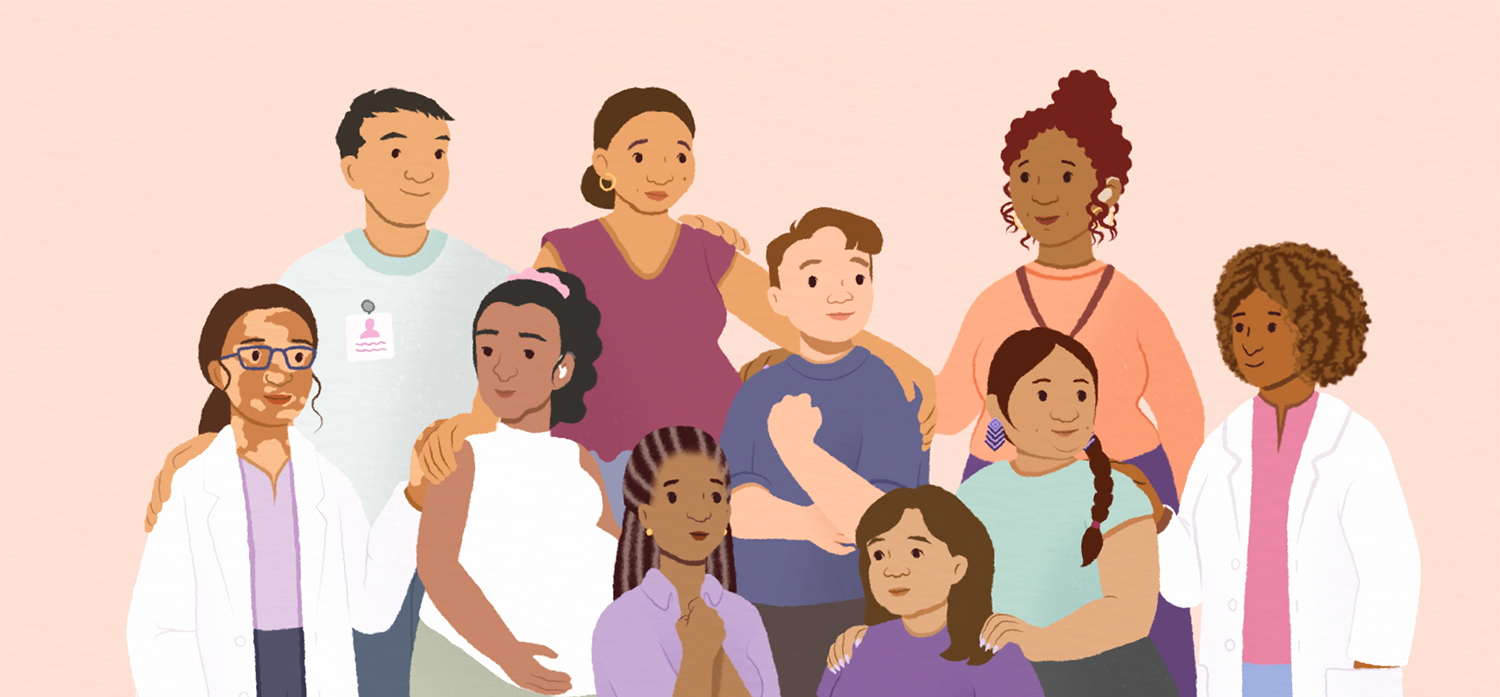
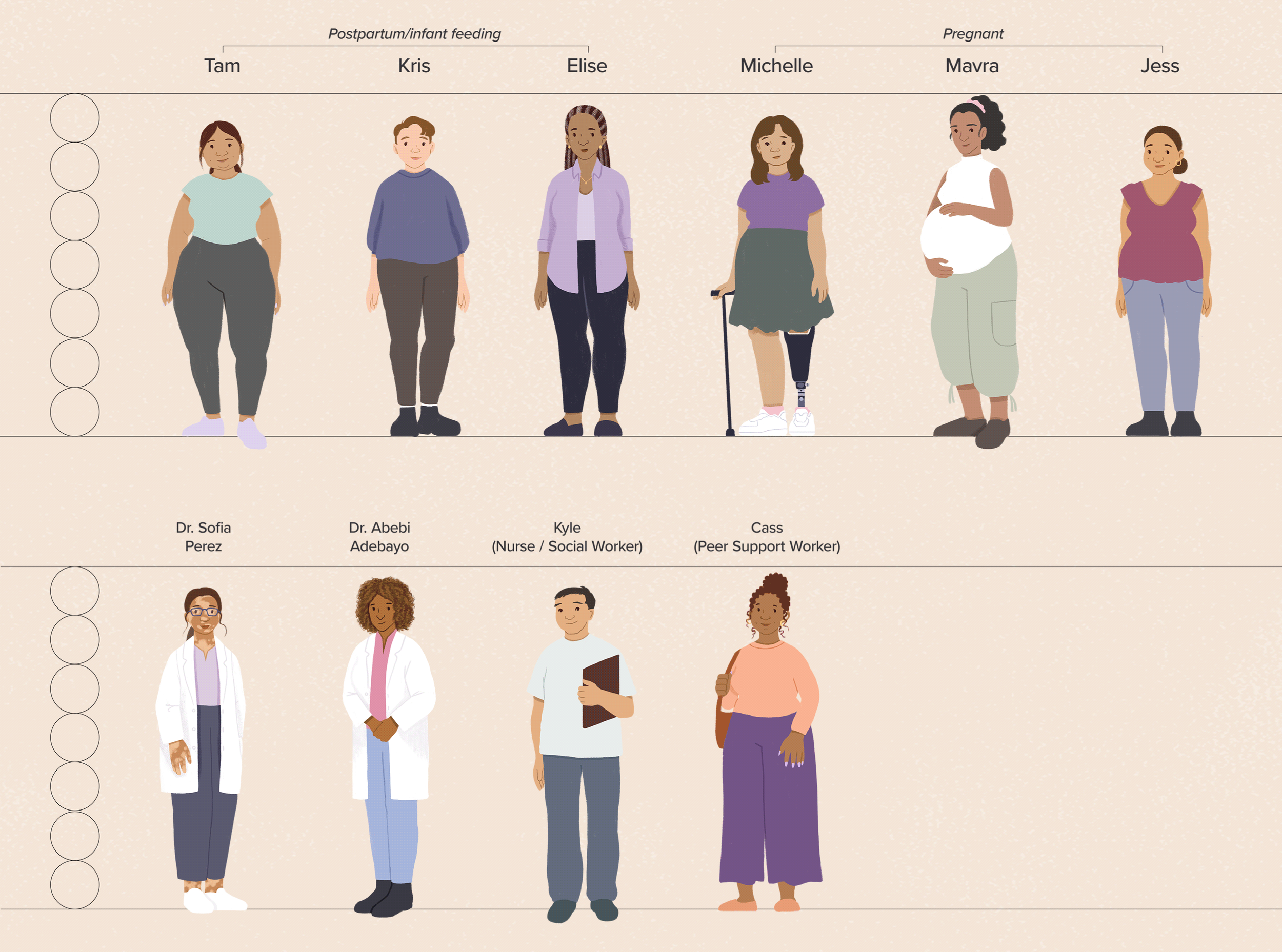
We developed an animation that presented this material in an approachable, sympathetic and straightforward manner. We created a cast of parents, healthcare providers and support workers, featuring a diversity of body type, gender, race, ability, and conditions.
Developing the Story with Parents
At each stage of developing the animation (scriptwriting, character design, storyboarding, animation drafts), we reviewed the work with a group of parents who had used cannabis while pregnant or lactating. Their time and feedback was invaluable, and their comments ensured that the animation would be useful to parents.
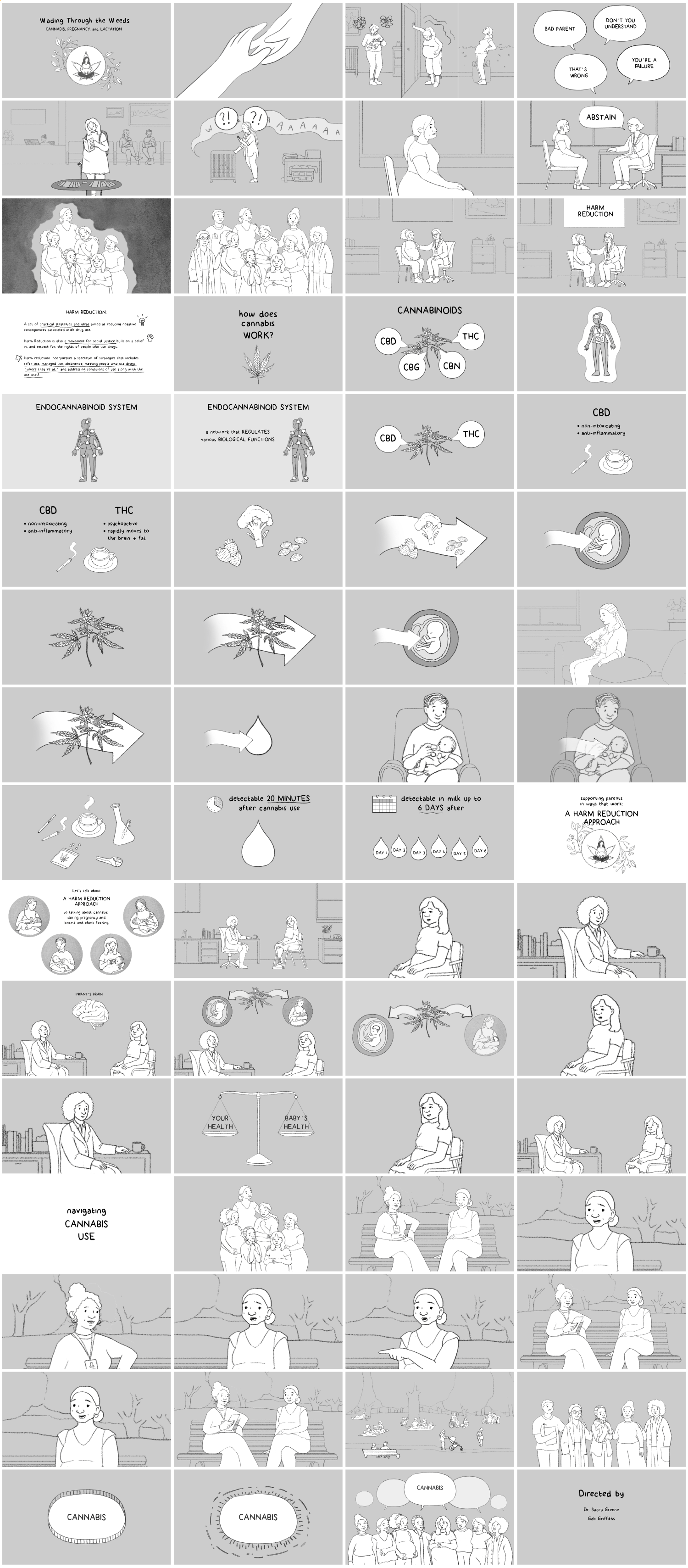
The animation showcases scenes which model sympathetic and productive conversations around cannabis use. This is a powerful technique that enables the viewer to learn what is being said as well as how it is being said. Since one of our main goals was to foster open and honest conversations, what better way than to model what that might actually look like?
Thank you so much to our incredible parent focus group, scientific advisory board, and research group team for all of your work and dedication in helping craft this piece.
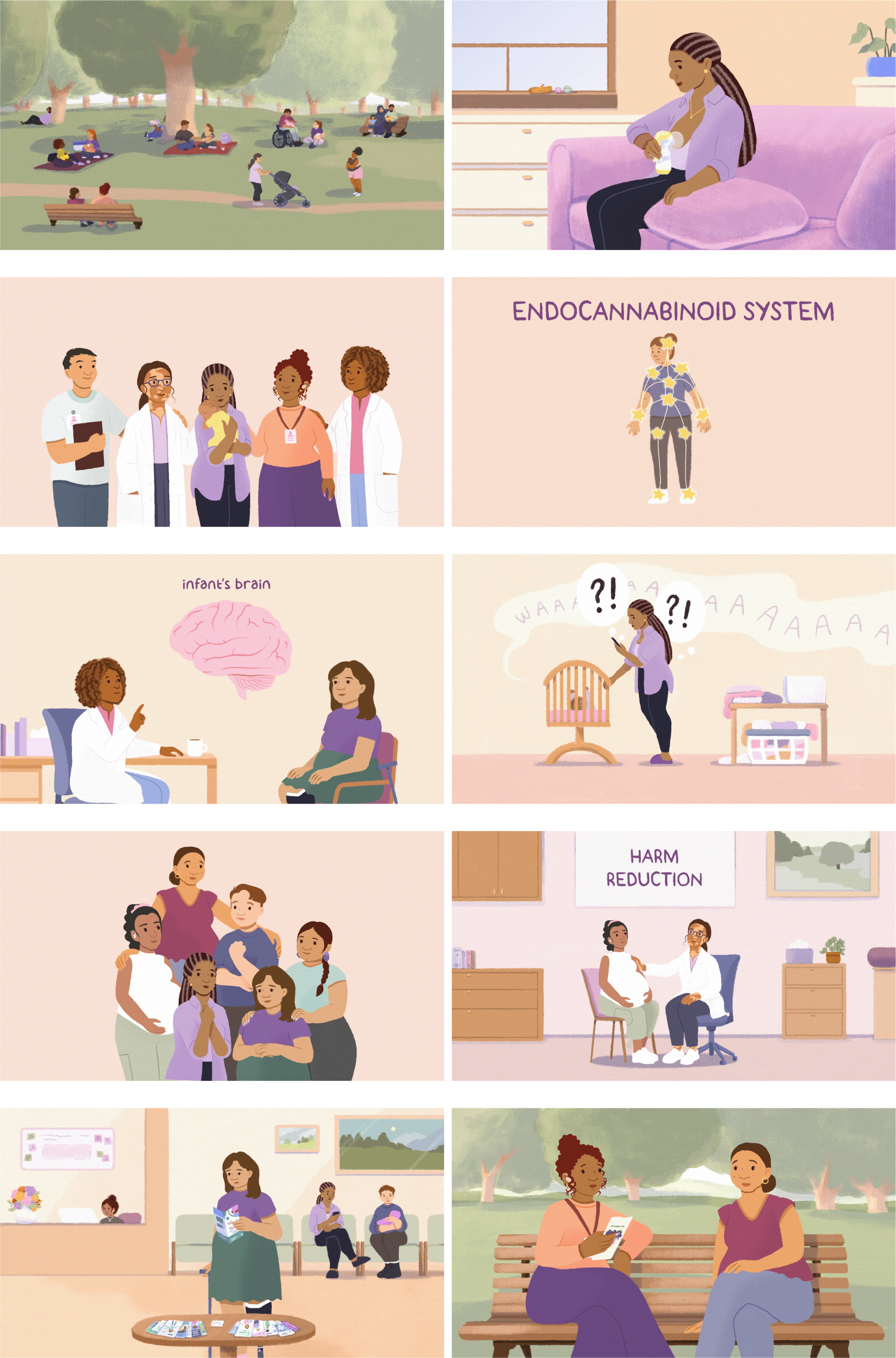
Styleframes
Final artwork was then created for all of the scenes of the animation. I knew that green was going to be an important colour, and so designed the rest of the colour palette to be complementary. Warm peachy tones and purples were our dominant midtone colours, with deep desaturated greens and purples filling in the darker tones.
We also wanted to have a handmade feel to the animation. Backgrounds were painted in Photoshop, characters were vectored in Adobe Illustrator, and everything was brought together with added texture effects in After Effects.
Character Rigging
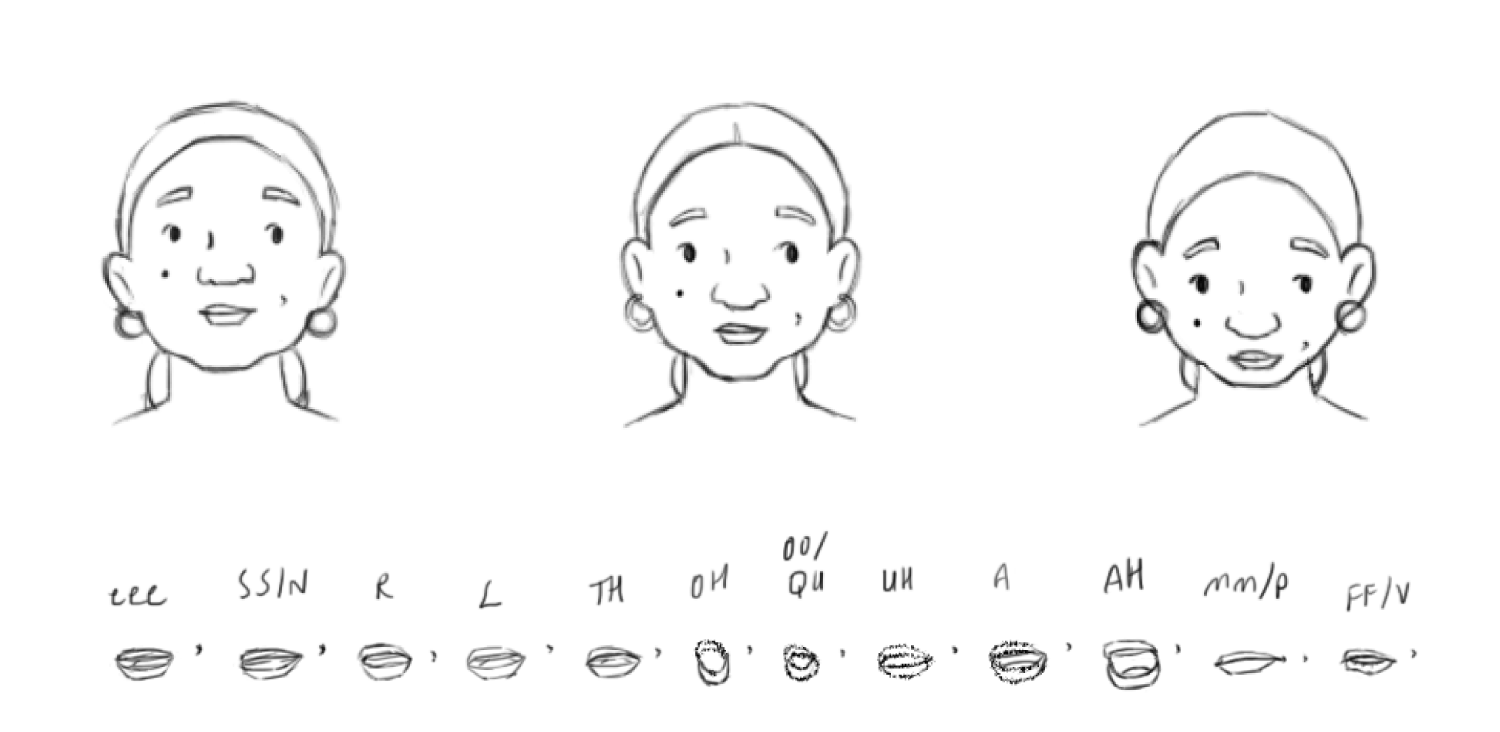
Character rigs were done in After Effects using the Joysticks & Sliders plugin. I also chose to use Adobe Animate’s lipsyncing tools for the final scene with Jess and Cass. To the right, you can see some sketches for Jess’s head rig and for the set of lip shapes used for lip synching.